|
I am a third-year Ph.D. student in Computer Science at Shanghai Jiao Tong University. Now, I am currently serving as an intern at Shanghai Artificial Intelligence Laboratory. I am also a member of Lab for Interpretability and Theory-Driven Deep Learning, School of Computer Science and advised by Prof. Quanshi Zhang. My current research focuses on Trustworthy AI. Email: tling@sjtu.edu.cn Google Scholar / Github / 知乎 |

|
|
|
|
[May. 2026] Three new preprints are available on arXiv: AgentDoG 1.5, What Do EEG Foundation Models Capture from Human Brain Signals?, and Attributing Emergence in Million-Agent Systems. [September. 2025] Our work Towards the Resistance of Neural Network Watermarking to Fine-tuning is accepted by NeurIPS 2025! |
|
|
|
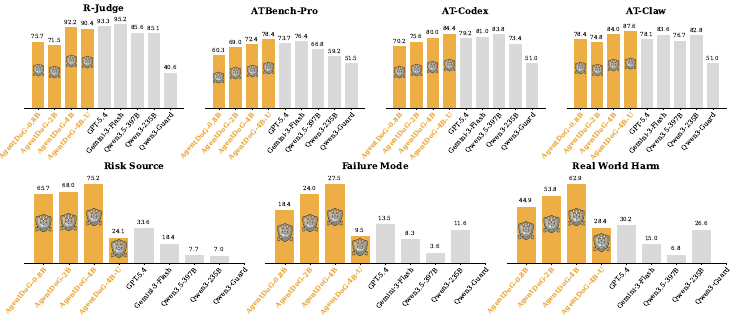
Dongrui Liu, Yu Li, Zhonghao Yang, Peng Wang, Guanxu Chen, Yuejin Xie, Qinghua Mao, Wanying Qu, Yanxu Zhu, Tianyi Zhou, Leitao Yuan, Zhijie Zheng, Qihao Lin, Yimin Wang, Haoyu Luo, Shuai Shao, Chen Qian, Qingyu Liu, Ling Tang, Ruiyang Qin, ... Arxiv, 2026 arXiv / GitHub / Huggingface This work proposes a lightweight and scalable agent safety alignment framework that updates the agent safety taxonomy, trains compact AgentDoG 1.5 variants with taxonomy-guided data, and deploys them as real-time guardrails. |
|
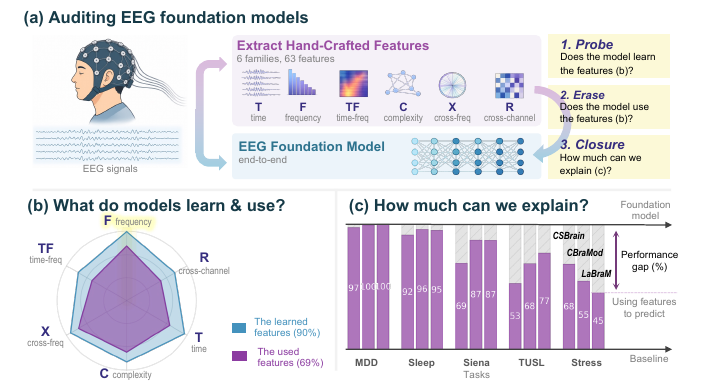
Ling Tang*, Qian Chen*, Jilin Mei, Houshi Xu, Quanshi Zhang, Jing Shao, Na Zou, Xia Hu, Dongrui Liu Arxiv, 2026 arXiv This paper audits EEG foundation models by asking what clinical features they learn, which features they use, and how much of their task performance can be explained by a 63-feature EEG lexicon. |
|
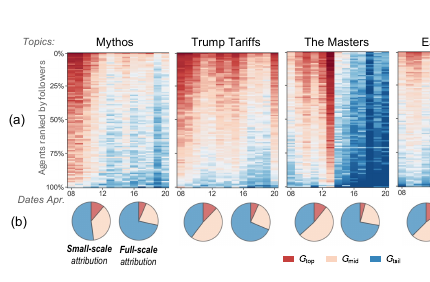
Ling Tang*, Jilin Mei*, Qian Chen, Qihan Ren, Linfeng Zhang, Quanshi Zhang, Jing Shao, Xia Hu, Dongrui Liu Arxiv, 2026 arXiv This paper scales emergence attribution in LLM-powered multi-agent systems to million-agent settings using Aumann-Shapley path-integral attribution, showing why small-scale attribution can structurally disagree with full-scale conclusions. |
|
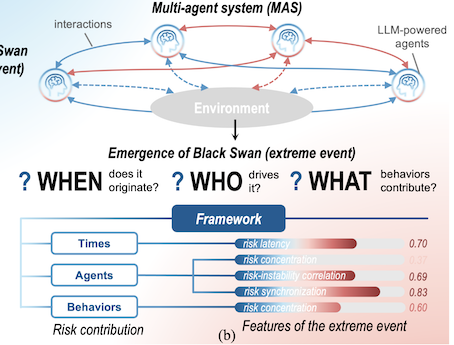
Ling Tang, Jilin Mei, Dongrui Liu, Chen Qian, Dawei Cheng, Jing Shao, Xia Hu Arxiv, 2026 arXiv / This paper proposes the first framework for explaining emergent extreme events in multi-agent systems, aiming to answer three fundamental questions: When does the event originate? Who drives it? And what behaviors contribute to it? |
|
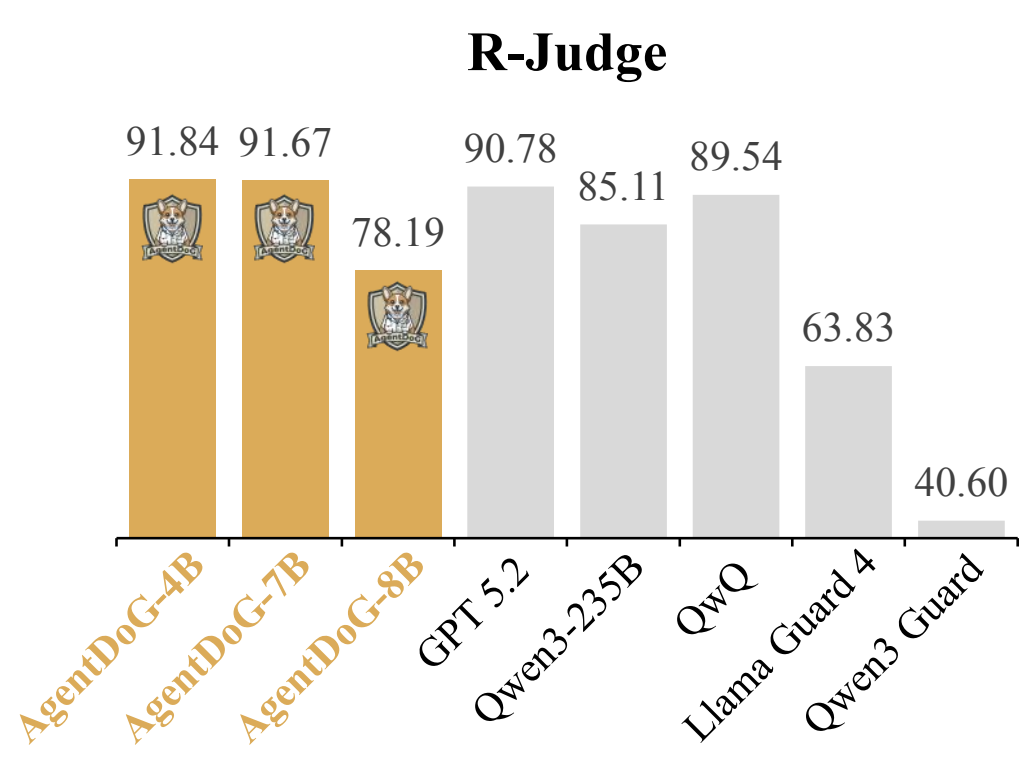
Dongrui Liu, Qihan Ren, Chen Qian, Shuai Shao, Yuejin Xie, Yu Li, Zhonghao Yang, Haoyu Luo, Peng Wang, Qingyu Liu, Binxin Hu, Ling Tang, Jilin Mei, Dadi Guo, Leitao Yuan, ... Arxiv, 2026 arXiv / GitHub / Huggingface We first propose a unified three-dimensional taxonomy that orthogonally categorizes agentic risks by their source (where), failure mode (how), and consequence (what). |
|
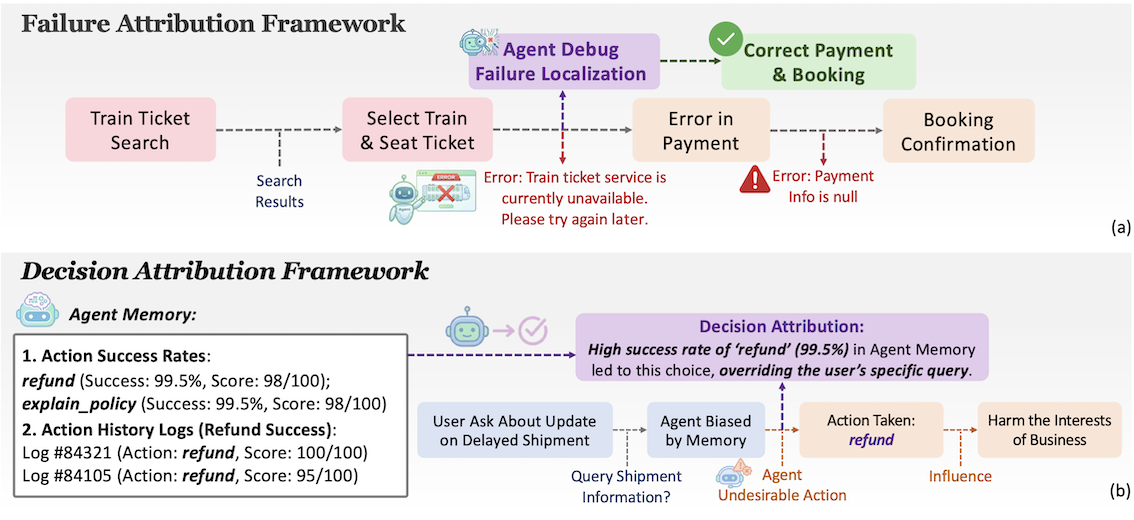
Chen Qian, Peng Wang, Dongrui Liu, Junyao Yang, Dadi Guo, Ling Tang, Jilin Mei, Qihan Ren, Shuai Shao, Yong Liu, Jie Fu, Jing Shao, Xia Hu Arxiv, 2026 arXiv We propose a novel framework for general agentic attribution, designed to identify the internal factors driving agent actions regardless of the task outcome. |
|
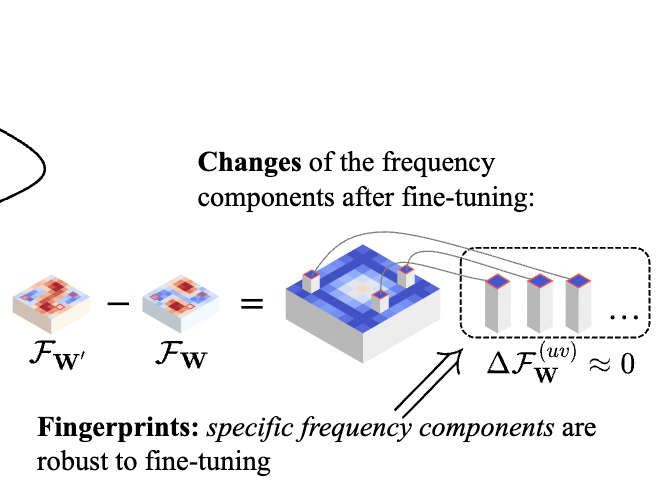
Ling Tang, Yuefeng Chen, Hui Xue, Quanshi Zhang NeurIPS, 2025 arXiv / GitHub / 机器之心 / 知乎 This paper proves a new watermarking method to embed the ownership information into a deep neural network (DNN), which is robust to fine-tuning. |
|
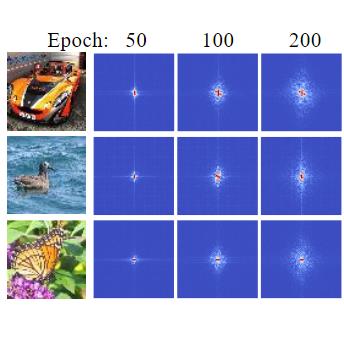
Ling Tang*, Wen Shen*, Zhanpeng Zhou, Quanshi Zhang ICML, 2023 arXiv / GitHub / 知乎 In this paper, we prove the representation problems with a cascaded convolutional decoder network, considering the capacity of representing different frequency components of an input sample. |
|
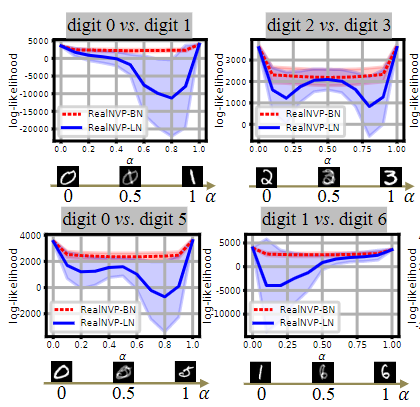
Zhanpeng Zhou*, Wen Shen*, Huixin Chen*, Ling Tang, Quanshi Zhang AAAI, 2024 (Oral) arXiv / GitHub / 知乎 In this paper, we prove the effects of the BN operation on the back-propagation of the first and second derivatives of the loss. |
|
|
|
[2023.09 - Now ] Ph.D. student in Computer Science and Technology , Shanghai Jiao Tong University. [2019.09 - 2023.06 ] Bachelor in Automation(IEEE Honor Class), Physics(minored) , Shanghai Jiao Tong University. |
|
|
|
[2026 Spr. ] Machine Learning (CS3612), Teaching Assistant, Shanghai Jiao Tong University. [2025 Spr. ] Machine Learning (CS3612), Teaching Assistant, Shanghai Jiao Tong University. [2023 Spr. ] Machine Learning (CS3612), Teaching Assistant, Shanghai Jiao Tong University. |
|
|
|
[Reviewer] NeurIPS 2026, ICML 2026, AAAI 2024, ICML 2023 |
|
|